Manual checks
Vehicle by vehicle. Item by item.
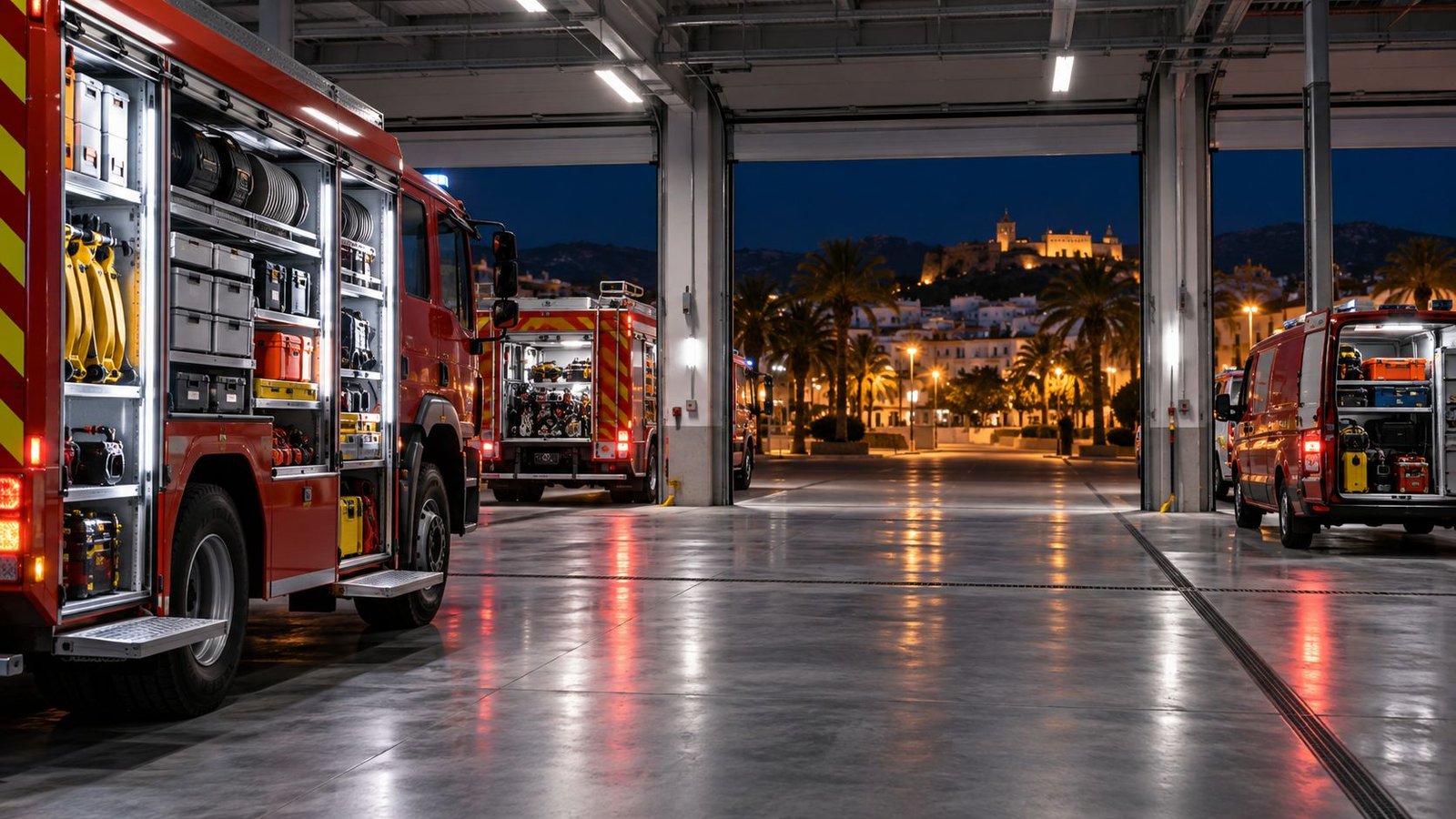
Conceptual image generated with AI
01 The challenge
Today, checking on-board equipment depends on people, time and operational discipline. And there is no real-time control of the fleet.
Vehicle by vehicle. Item by item.
No immediate traceability of on-board equipment and no fleet control.
Essential equipment may not be available when an emergency begins.
Staff hours, checks that never get completed, and fatigue.
The problem is not knowing the inventory. The problem is being able to trust it.
02 The solution
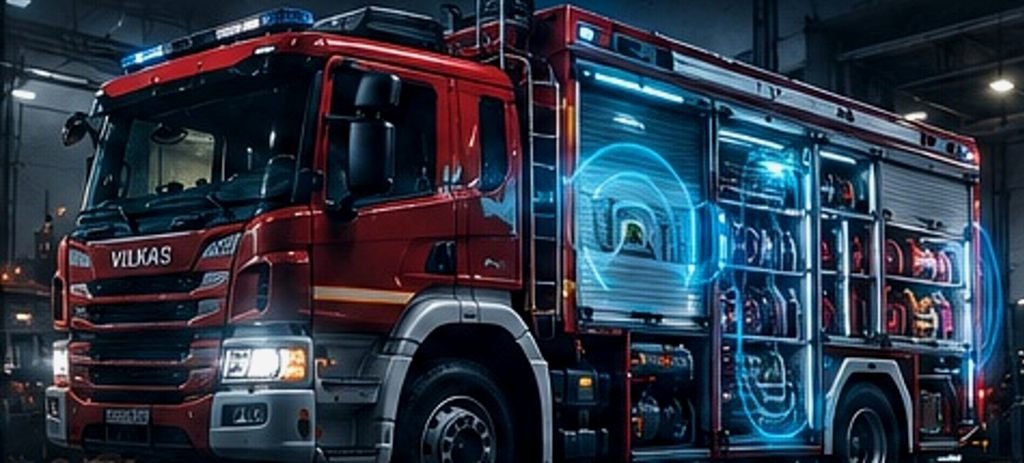
Every critical item carries a tag. The vehicle reads its own inventory with no operator intervention and shows only two possible states: complete, or what is missing.
If the read is not complete, the system never shows “OK”.
Designed on a zero-false-positive principle.
03 How it works
Automatic scan of the vehicle at the station, with no operator intervention.
Validation of the complete inventory before leaving.
Detection and location of equipment.
Checking and updating the status of the fleet.
Goal: detect missing equipment before the vehicle goes into service.
04 Technology
| Criterion | Manual | Short-range RFID | VILKAS UHF |
|---|---|---|---|
| Verification time | 45 min – 2 h per vehicle and shift change | To be determined | 3 seconds |
| Read range | Not applicable | Approx. 5–10 cm | Approx. 3–8 m |
| Intervention | High | Medium | None. Passive reading |
| Traceability | Paper records, no alerts | Partial records, no forecasting | Item-level history and alerts |
| Scalability | Limited | Limited | High: from pilot to fleet |
Reference values from the VILKAS technical proposal; confirmed in each pilot according to vehicle and equipment.
Long-range radio-frequency identification, with no line of sight or manual scanning.
Tags built for the environment of an emergency vehicle.
Works without coverage and syncs automatically when connectivity returns.
Vehicle status, inventory per vehicle, alerts, maintenance, reports and traceability.
Inventory data synchronised securely between vehicle and platform.
Ready to integrate with the operator’s systems and scale to the whole fleet.
05 Application
For operators and manufacturers of emergency vehicles who need to know, with certainty, that every vehicle leaves fully equipped.
The vehicle checks itself while it is at base.
One clear answer: complete, or what is missing.
Status, alerts and traceability from a single system.
06 Gallery
07 Outcome
1–2 vehicles.
Real operation.
Full station or base.
Entire fleet.
Validate → Adjust → Deploy → Scale.
Operational results will be published once validation on a real vehicle is complete.
Next step
Vehicle survey, installation and tagging, and validation in operation. Let’s talk about your fleet.